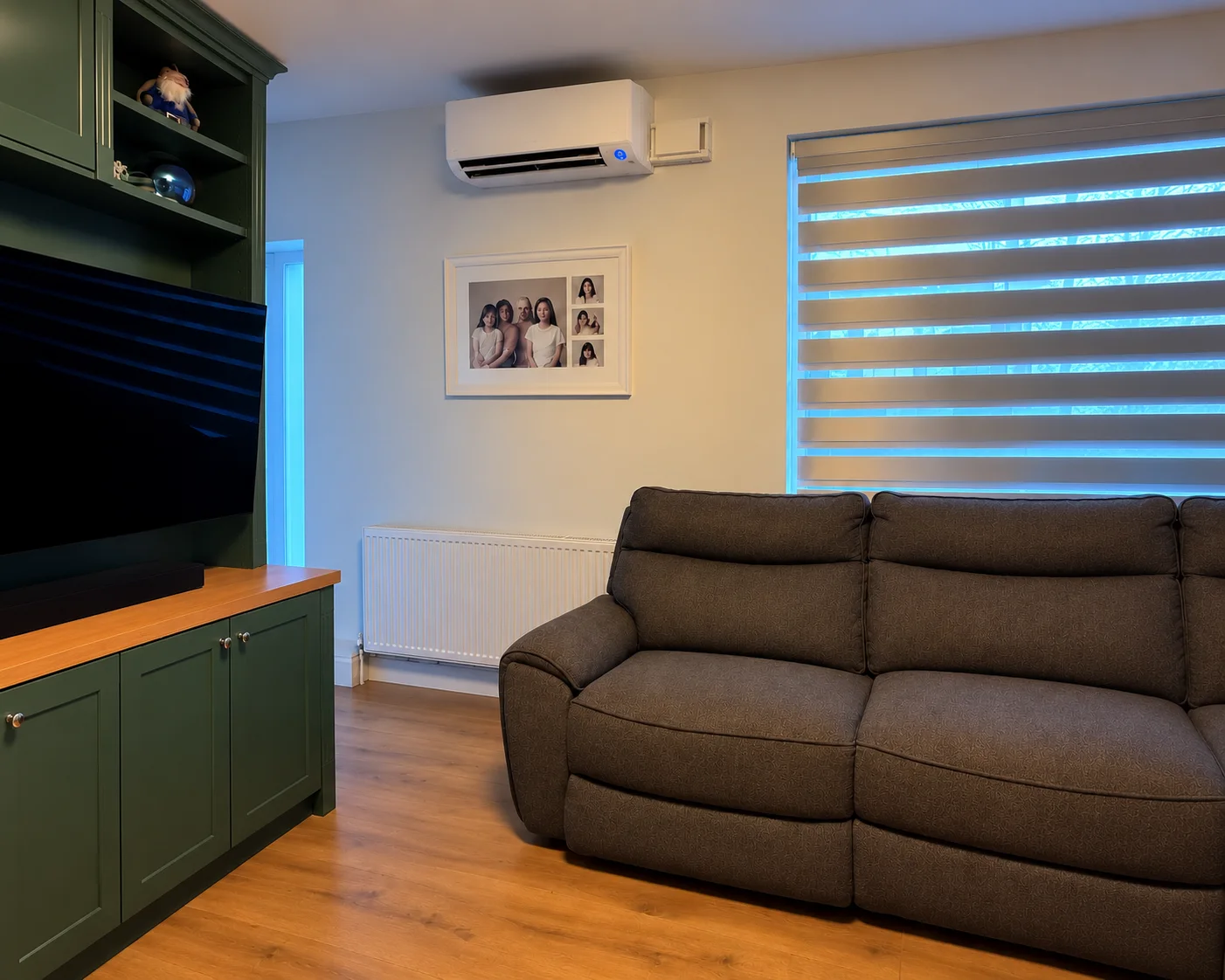
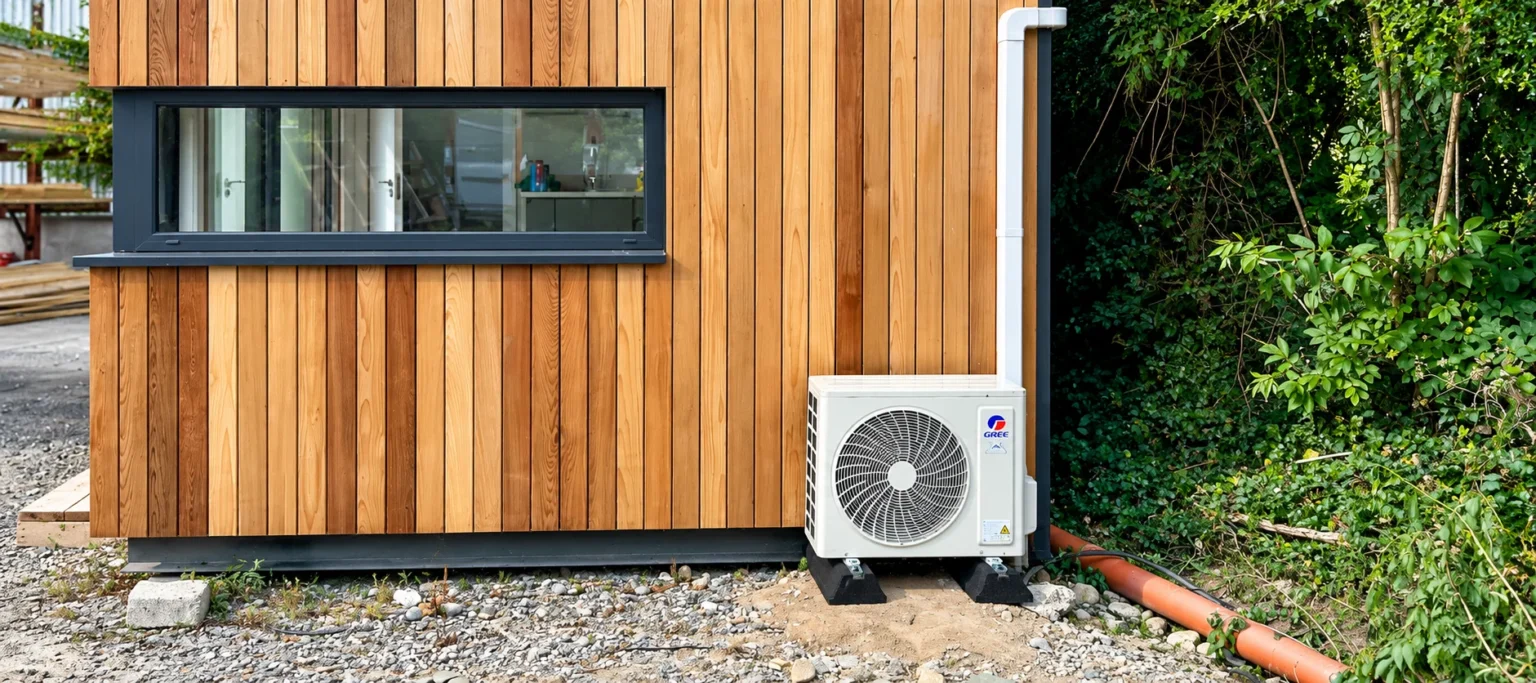
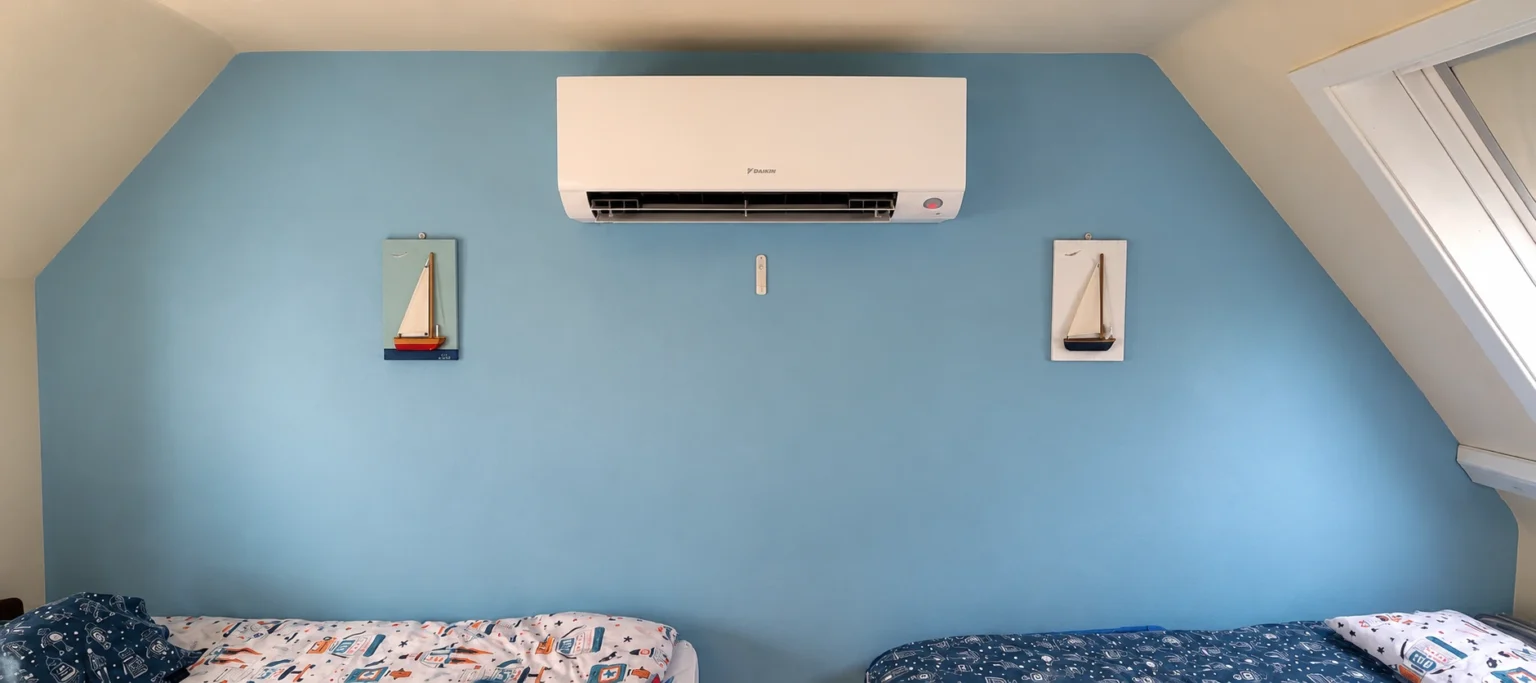
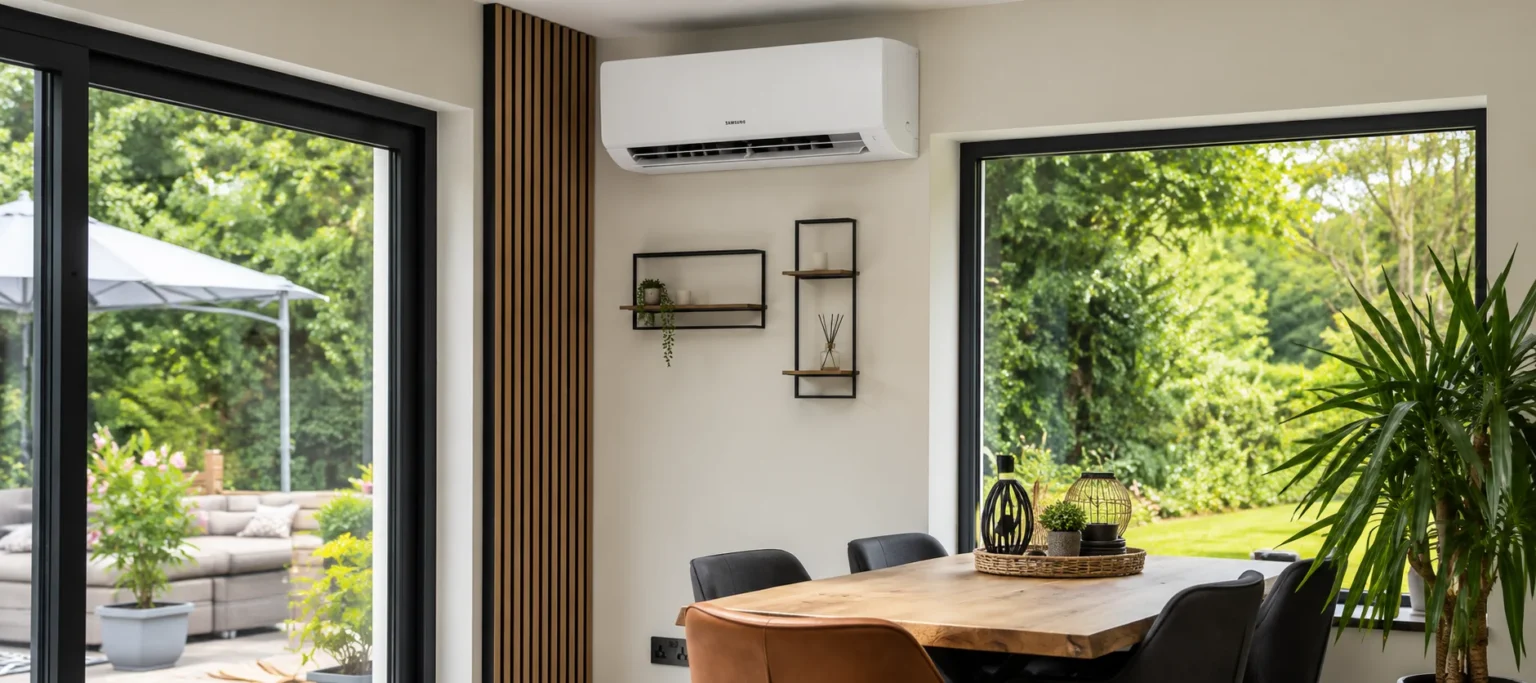
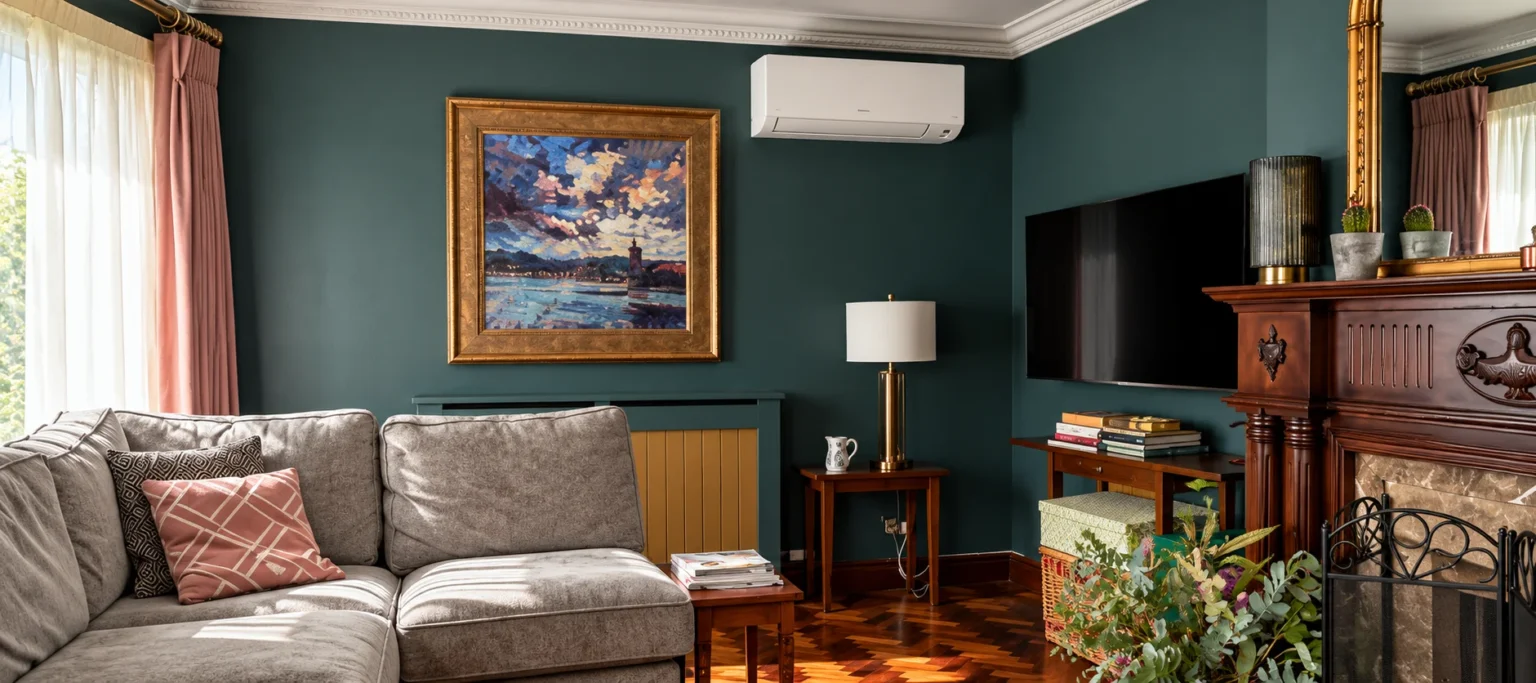
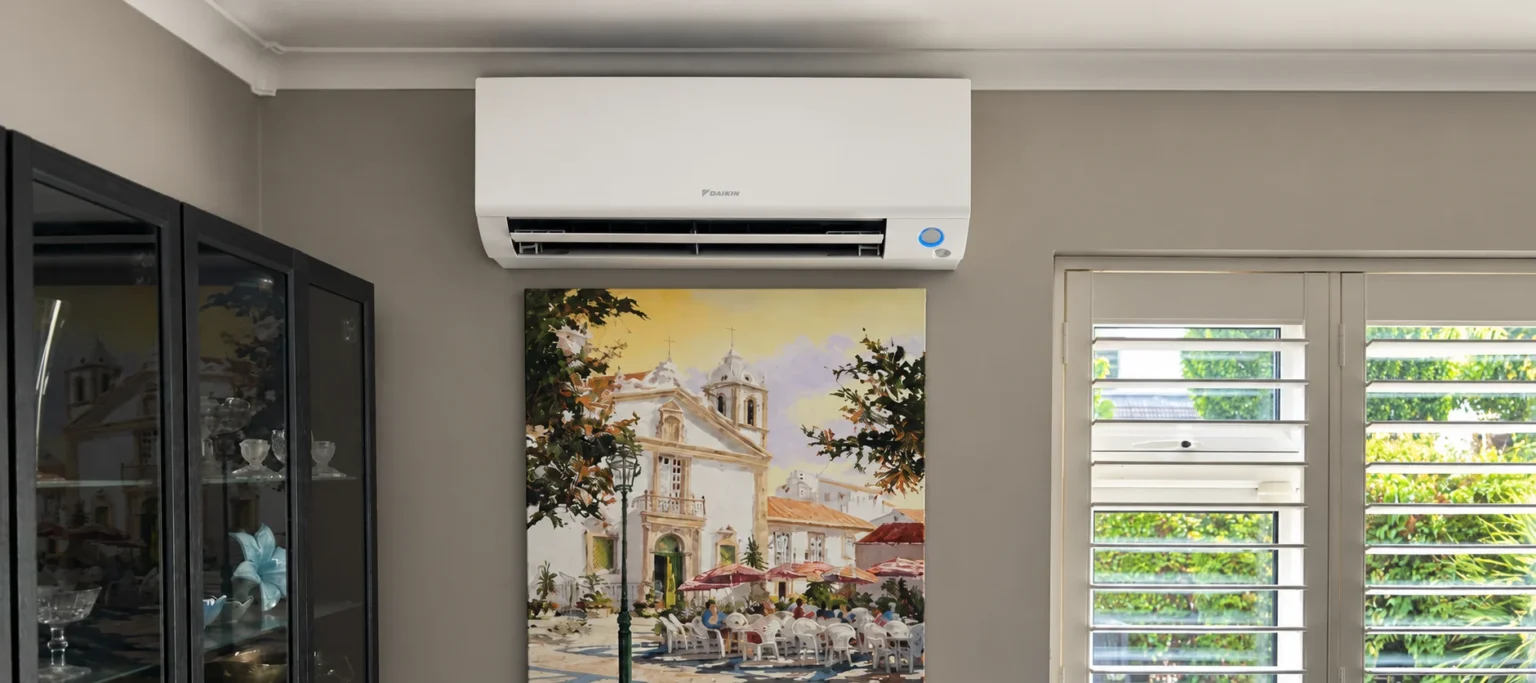
Both are heat pumps. Both take heat from the outside air, even in winter. The difference is where the heat goes. An air-to-water heat pump heats water for your radiators, underfloor heating and hot water cylinder, replacing the boiler. An air-to-air heat pump blows warm or cool air into a room through a wall unit, and with a Daikin Multi+ it can heat a hot water cylinder as well. One heats water. The other heats and cools air, one room at a time or the whole house on a multi-split.
People searching “air to water heat pump disadvantages” are usually trying to work out whether the big system is right for them, or whether something smaller would do. This guide lays out how each works, what each costs, the grants, the running costs, and which homes suit which. We install air-to-air, so we will say where air-to-water is the better choice rather than pretend otherwise.
How each one works
Air-to-water
An outdoor unit extracts heat from the air and passes it to water in a heating circuit. That water goes to radiators or underfloor pipes and to a hot water cylinder. Because the water runs cooler than a boiler would run it (around 35 to 50 degrees instead of 70), the house needs good insulation and often larger radiators or underfloor heating to feel warm. It runs for long periods at a low level rather than blasting on and off.
Air-to-air
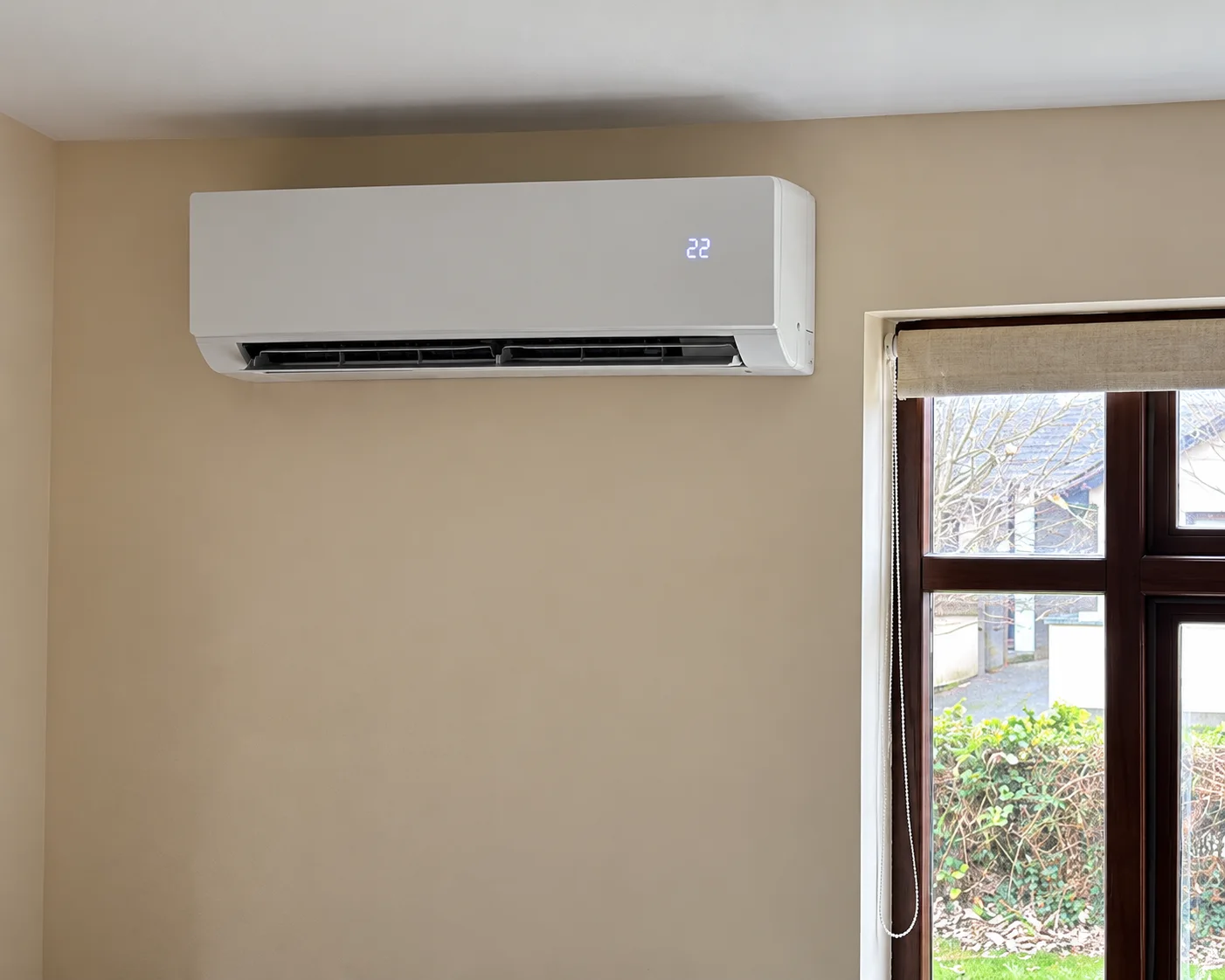
An outdoor unit extracts heat from the air and sends it through a small refrigerant pipe to an indoor unit on the wall or ceiling, which blows warm air into the room. Reverse it and it cools. Each indoor unit heats one room or one open-plan space, and a multi-split runs several indoor units from one outdoor unit. There are no radiators or wet pipework involved, and a Daikin Multi+ adds a hot water cylinder if you want that from the same system.
Side by side
| Air-to-air | Air-to-water | |
|---|---|---|
| What it heats | The air in a room, through a wall or ceiling unit | Water for radiators, underfloor heating and the hot water cylinder |
| Cools in summer | Yes | No |
| Hot water | Yes with a Daikin Multi+ and a cylinder; otherwise you keep your immersion or boiler | Yes |
| Rooms covered | One per indoor unit, up to five on a multi-split | The whole house |
| Installation | One room in a day; no radiators, no floors up | Days to weeks; often new radiators or underfloor, a cylinder and a plant space |
| Needs a well-insulated house | Helps, but not required | Yes, and SEAI checks with a technical assessment |
| Installed cost | From €1,850 per room | Typically €20,000 to €25,000 |
| SEAI grant | €7,500 on a whole-house system, plus €2,000 boiler scrappage | €12,500, plus €2,000 boiler scrappage |
| Best for | New builds, homes getting off oil or gas, extensions, garden rooms and any room that overheats in summer | Homes set on keeping radiators or underfloor heating and running them from one heat pump |
The honest disadvantages of each
Air-to-water
- Cost and disruption. It is a major job: outdoor unit, cylinder, often new radiators or underfloor, and days of work. Typical installed costs run from €20,000 to €25,000 before the €12,500 grant.
- It needs a tight house. On a draughty, poorly insulated house it runs flat out and the bills disappoint. SEAI requires a technical assessment on homes built before 2007 for this reason, and you may need insulation work first.
- No cooling. If summer overheating is one of your problems, it does nothing for it.
- Slow response. It is designed to tick over, not to heat a cold room quickly.
Air-to-air
- Hot water needs the Multi+ version. A standard split leaves hot water to your immersion or boiler; a Daikin Multi+ with a cylinder covers it.
- Room by room. One indoor unit does one room, so a whole house means a multi-split with a unit in each main room.
- A unit on the wall. Some people do not want to see it. The slimmer ranges help, but it is there.
- The grant is whole-house only. The €7,500 grant applies when the house goes fully air-to-air, not to a single-room unit.
What each costs
Air-to-air: from €1,850 per room, installed and including VAT, for a wall unit. Ceiling cassettes from €2,800, floor standing units from €2,750. A whole-house five-room multi-split is around €14,000 installed before the €7,500 grant and €2,000 boiler scrappage; smaller multi-splits are priced on a survey. Full breakdown in our guide to air-to-air heat pump costs.
Air-to-water: typically €20,000 to €25,000 installed, depending on the house, the radiators and whether underfloor heating is going in. Deep retrofits that include insulation, windows and ventilation run much higher. The €12,500 grant, plus €2,000 boiler scrappage, comes off that.
Running costs and efficiency
Both are heat pumps, so both deliver roughly 3 to 4 kWh of heat for every 1 kWh of electricity. Air-to-air tends to come out slightly ahead in practice for two reasons: it heats air directly at a lower temperature than water, and you only run it in the rooms you are using. Air-to-water heats the whole circuit whether you are in the back bedroom or not.
Against the old systems, both win clearly. An electric heater gives you 1 kWh of heat per kWh. An oil or gas boiler gives a little under 1 kWh per kWh of fuel. At current prices a kWh of heat from a heat pump costs around a third of a kWh from an electric heater, and less than a kWh from oil.
Which homes suit which
Choose air-to-water if
- You want to keep radiators or underfloor heating and run them from one heat pump
- You have the budget for a €20,000 to €25,000 install and the disruption that goes with it
- You already have underfloor heating designed for low-temperature water
- The house is already well insulated
Choose air-to-air if
- You have a room the heating does not reach: a garden room, extension, attic or conservatory
- You want cooling in summer as well as heat in winter
- You are on oil or gas and want off it: a whole-house system is around €14,000 before the €7,500 grant and €2,000 boiler scrappage
- You are building new and want heating, cooling and hot water from one system without a wet heating circuit
- You rent out a room, run a home office or have one room that is always the problem
Can you have both?
Yes, and it is more common than people think. Air-to-water for the main heating and hot water, and one air-to-air unit in the room that overheats in summer or the garden office the main system never reached. If you already have air-to-water and one room is still a problem, air-to-air is the fix.
“Got installed air to air heating system for my 3bed bungalow, very satisfied, great service, quick, clean job. My bills lowered straight away.” Egiasju Lepi, Google review
Our recommendation
For most homes, air-to-air is the answer, whether the question is “how do I heat my whole house without oil or gas”, “how do I sort this one room” or “how do I cut my heating bill without a building project”. A whole-house multi-split heats every main room, cools in summer, can do your hot water with a Multi+, and costs around half of an air-to-water install. Air-to-water earns its place where you are set on keeping radiators or underfloor heating on a wet circuit. Tell us about your home and we will say which you need.
Frequently asked questions
Is an air-to-water heat pump worth it in an old house?
Only once the house is insulated to a reasonable standard. SEAI’s technical assessment exists to answer exactly this. On a leaky house the running costs disappoint and the house never feels warm.
Can air-to-air heat a whole house?
Yes. A multi-split with an indoor unit in each main room heats the house, cools it in summer and qualifies for the €7,500 SEAI grant. Bathrooms and halls are usually left to a small electric heater.
Which has the better grant?
Air-to-water gets €12,500 against a bill of €20,000 to €25,000. A whole-house air-to-air system gets €7,500 against a bill of around €14,000. Both get the €2,000 boiler scrappage on top if an oil or gas boiler is coming out, so air-to-air leaves you paying roughly half as much.
Do both qualify for the grant on a house built after 2021?
No. SEAI heat pump grants are for homes built and occupied before 2021.
Is air-to-air just air conditioning?
It is the same unit. “Air conditioning” is what people call it in summer; “air-to-air heat pump” is what it is doing in winter.
Do you install air-to-water?
No. We install air-to-air systems from Daikin and Gree. If air-to-water is what you need, we will say so.
Talk to us about your home
Send a photo of the room, tell us how you heat the house now, and we will tell you whether air-to-air is the right fit and what it would cost, within 24 hours.
Air-to-water figures are typical market ranges, not a quote. Grant amounts and conditions are set by SEAI and can change; check seai.ie for the current scheme.