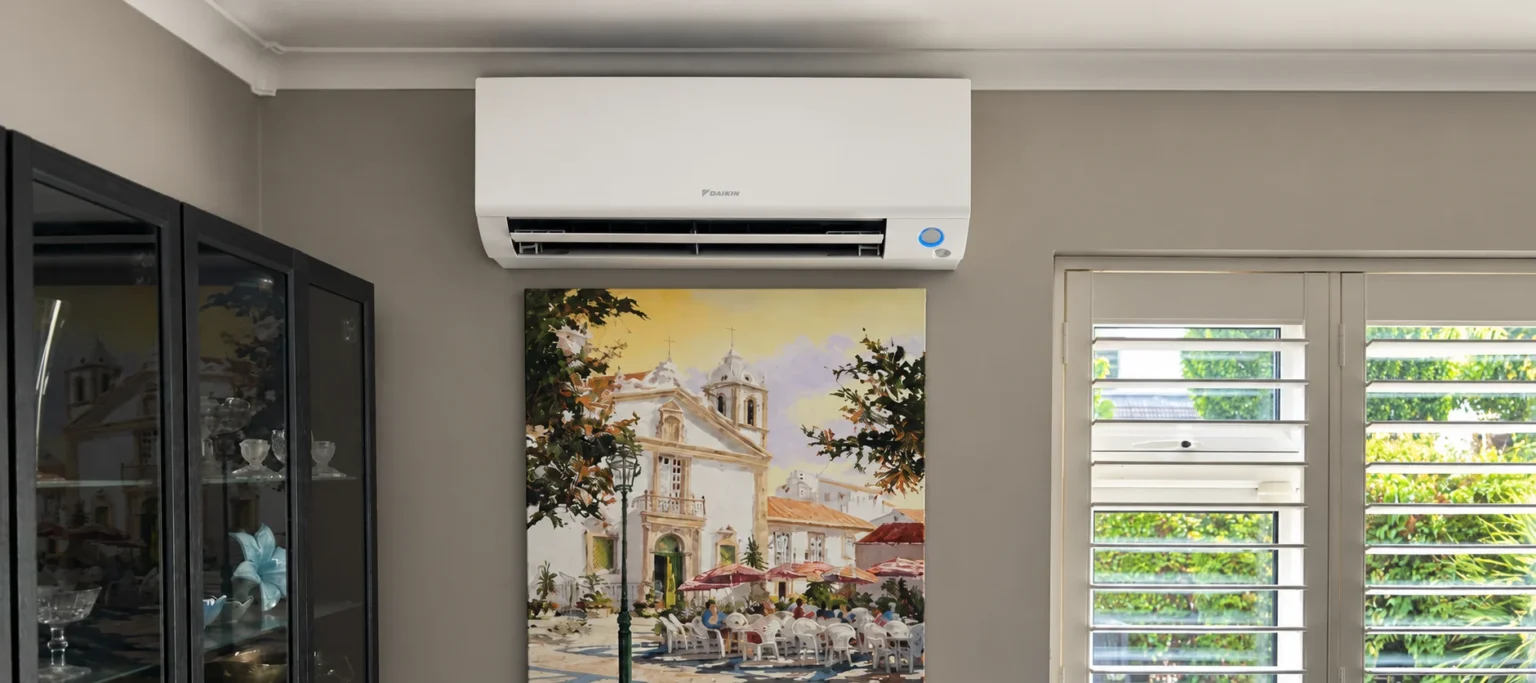
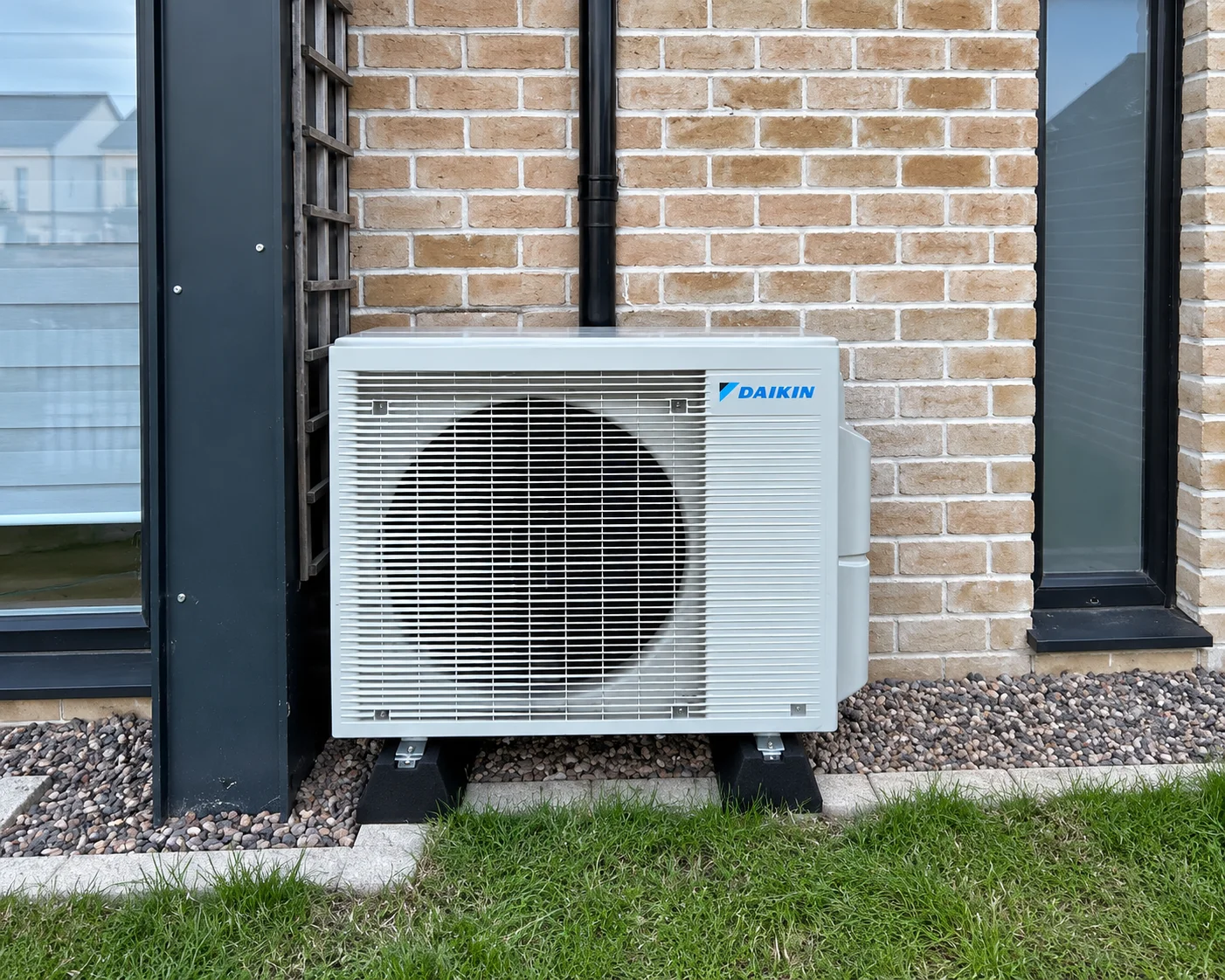
Short answer: cooling a living room with a fixed air conditioning unit costs about 19c an hour on SEAI’s July 2026 day-rate electricity price. A bedroom unit is closer to 14c an hour. A hot week with the unit on for eight hours a day comes to around €10, and a whole Irish summer of real use is usually €40 to €60. A portable unit costs more per hour for less cooling, and leaving a fixed unit holding temperature is cheaper than switching it on and off.
This guide gives you the cost per hour by unit size, the cost of a heatwave week and a full summer, how a fixed unit compares with a portable or a fan, and what actually moves the bill. Heating costs are a separate question, covered in can air conditioning heat your home in winter.
How the cost is worked out
An air conditioner’s cooling output is bigger than the electricity it uses, because it moves heat out of the room rather than destroying it. A good wall unit moves about 4 kW of heat for every 1 kW of electricity at full output. Once the room is at temperature the inverter slows the compressor down, so the average draw over an evening is well below the rated figure. Multiply the average draw by the hours and by the electricity price and you have the cost.
Electricity price used throughout: 34.38c per kWh including VAT, SEAI Domestic Fuel Cost Comparison, 1 July 2026, standard day rate.
Cost per hour by unit size
| Unit | Typical room | Average draw while cooling | Cost per hour |
|---|---|---|---|
| 2.5 kW wall unit | Bedroom, garden room, home office up to 20 m² | About 0.4 kW | 14c |
| 3.5 kW wall unit | Living room, 20 to 30 m² | About 0.55 kW | 19c |
| 5 kW wall unit or ceiling cassette | Open-plan kitchen and living, 30 to 45 m² | About 0.8 kW | 28c |
| Multi-split, two rooms running | Living room and bedroom | About 0.9 kW | 31c |
Averages assume a correctly sized unit, blinds down on the sunny side and a target of 23 to 24 degrees. A unit that is too small for the room runs flat out and costs more; so does chasing 18 degrees on a 28-degree day.
What a heatwave week costs
Irish heat tends to arrive in runs of five to ten days. Here is a living room unit through a seven-day spell.
| How you use it | Hours a day | kWh for the week | Cost for the week |
|---|---|---|---|
| Evenings only | 4 | 15 | €5 |
| Afternoon and evening | 8 | 31 | €11 |
| All day, holding 24°C | 14 | 46 | €16 |
| Bedroom unit overnight | 8 | 22 | €8 |
Even the heaviest line is less than a round of drinks. The reason people worry about the cost is that they are picturing a portable unit or an electric heater in reverse, and neither behaves like a fixed inverter unit.
What a full summer costs
Most Irish homes run the cooling on 30 to 50 days a year. Taking 40 days at six hours a day:
| Unit | kWh for the summer | Cost for the summer |
|---|---|---|
| 2.5 kW bedroom or garden room unit | 96 | €33 |
| 3.5 kW living room unit | 132 | €45 |
| 5 kW open-plan unit | 192 | €66 |
Set against what the same unit saves you in winter, which is where the money is, summer cooling is close to free. The winter side is in our heat pump vs oil and gas guide.
“Got Daikin air to air installed and could not be happier, very economical way of heating the space.” Irene Hulevych, Google review
Fixed unit vs portable unit vs fan
This is the comparison that matters if you are deciding whether to buy a fixed unit at all.
| Option | Cooling you get | Electricity used | Cost per hour | What it is like |
|---|---|---|---|---|
| Fixed 3.5 kW wall unit | 3.5 kW, whole room, 23°C held | About 0.55 kW | 19c | Quiet, around 20 dB indoors, window shut |
| Portable unit, 2 to 2.5 kW | Less than rated: the exhaust hose pulls warm air back in | About 0.9 kW | 31c | Loud, compressor in the room, hose out the window |
| Desk or pedestal fan | No cooling, moves air | About 0.05 kW | 2c | Fine until the room is above 26°C |
A portable unit uses more electricity than a fixed unit and cools less, because the hose through the open window lets warm air straight back in. A fan is cheap but it does not lower the temperature; on a 28-degree night it moves warm air around. The home air conditioning page has the full fixed-versus-portable comparison.
Is it cheaper to leave it on all day?
For a fixed inverter unit, usually yes, within reason. Cooling a hot room from 28 to 24 degrees is the expensive part, because the compressor runs at full power for twenty minutes. Holding 24 degrees once it is there costs very little, because the inverter ticks over at a fraction of its rated draw. So on a hot day it is cheaper to set it to 24 and leave it than to blast it to 20, switch it off, and start again two hours later.
Overnight, use the sleep timer or night mode. The unit holds the room for the first couple of hours while you fall asleep, then eases off.
Six things that change the bill
- Target temperature. Every degree below 24 adds roughly 5 to 8 per cent to the running cost. 23 to 24 is comfortable in Ireland.
- Sun through the glass. Blinds or curtains on the south and west side cut the cooling load more than anything else.
- Unit size. An undersized unit never slows down. A correctly sized one coasts.
- A clean filter. A blocked filter chokes the airflow and the unit works harder for the same cooling. It is cleaned at the annual service.
- Doors and windows. Cooling a room with the door open is cooling the hall as well.
- Night rate. If you have a night-rate tariff, overnight cooling in the bedroom costs less than half the day-rate figures above.
Frequently asked questions
How much does it cost to run air conditioning per hour in Ireland?
About 14c an hour for a bedroom-sized unit and 19c for a living room unit on the standard day rate, once the room is at temperature. Larger open-plan units are nearer 28c.
How much does air conditioning add to the electricity bill?
For a living room unit used on 40 hot days a year, roughly €45 for the summer. A heatwave week with heavy use is €10 to €16.
Is a portable air conditioner cheaper to run?
No. A portable unit typically draws more electricity than a fixed wall unit and delivers less cooling, because the exhaust hose pulls warm air back into the room.
Should I turn it off when I leave the room?
For an hour or two, leave it holding temperature. For the day, turn it off or set a timer to bring the room down before you get home.
Does it cost more to cool or to heat?
Per hour they are similar. Over a year heating costs more simply because Irish winters are long and summers are short, and the heating side is where the unit saves you money against oil, gas or electric heaters.
Get a fixed price for a unit
Tell us the room and whether it is cooling, heating or both you are after, and we will recommend the right size and give you a fixed installed price within 24 hours.
Costs use SEAI’s Domestic Fuel Cost Comparison of 1 July 2026 day-rate electricity price of 34.38c per kWh including VAT. Draw figures are typical averages for correctly sized Daikin and Gree inverter units in insulated rooms; your usage will vary with the room, the weather and the temperature you set.