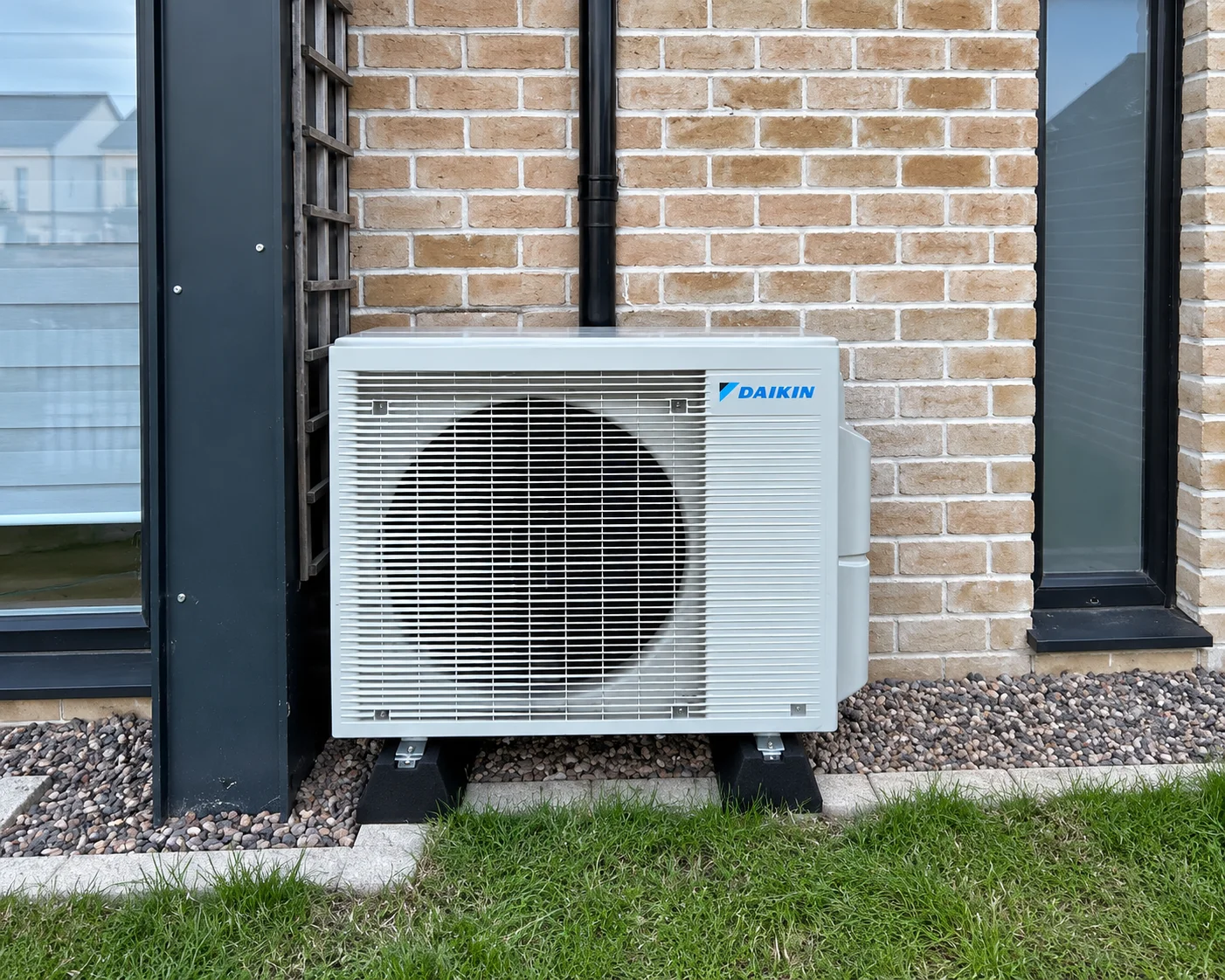
Short answer: on SEAI’s July 2026 fuel prices, an air-to-air heat pump delivers a kilowatt-hour of heat for about 11.5c. Kerosene oil costs 14.6c to 16.7c for the same heat, mains gas 14.5c to 20.5c depending on your tariff band, and a plug-in electric heater 34.4c. Heat pumps win on running cost, and the gap widens if you can run them on a night rate.
This guide shows where those numbers come from, what they mean for a single room and a whole house, and where the catches are. The figures are SEAI’s, not ours. The installed prices are ours.
Where the figures come from
SEAI publishes a Domestic Fuel Cost Comparison several times a year. It lists the price of every common fuel per kilowatt-hour of energy, including VAT, and then converts that into the price per kilowatt-hour of useful heat once the boiler or heater’s efficiency is applied. We have used the 1 July 2026 edition throughout.
The useful-heat figure is the one that matters, because you do not buy litres of oil for their own sake. You buy warm rooms.
Cost per kWh of heat: heat pump vs oil vs gas vs electric
| Heating system | Fuel price | Efficiency | Cost per kWh of heat |
|---|---|---|---|
| Air-to-air heat pump | 34.38c per kWh electricity | SPF 3.0 (300%) | 11.5c |
| Air-to-air heat pump on night rate | 15.42c per kWh electricity | SPF 3.0 | 5.1c |
| Kerosene oil boiler | 11.72c per kWh | 80% to 70% | 14.6c to 16.7c |
| Mains gas boiler, band D2 | 13.00c per kWh | 90% to 80% | 14.5c to 16.3c |
| Mains gas boiler, band D1 | 16.41c per kWh | 90% to 80% | 18.2c to 20.5c |
| LPG boiler | 17.67c per kWh | 90% to 80% | 19.6c to 22.1c |
| Electric fan or panel heater | 34.38c per kWh | 100% | 34.4c |
| Electric storage heater | 38.2c effective | 100% | 38.2c |
Source: SEAI Domestic Fuel Cost Comparison, 1 July 2026, all prices including VAT. The heat pump line uses a seasonal performance factor (SPF) of 3, meaning 3 kWh of heat for every 1 kWh of electricity. SEAI gives air-to-air systems a range of 2.5 to 4.2, which puts the cost between 13.8c and 8.2c per kWh of heat.
What SPF means in plain English
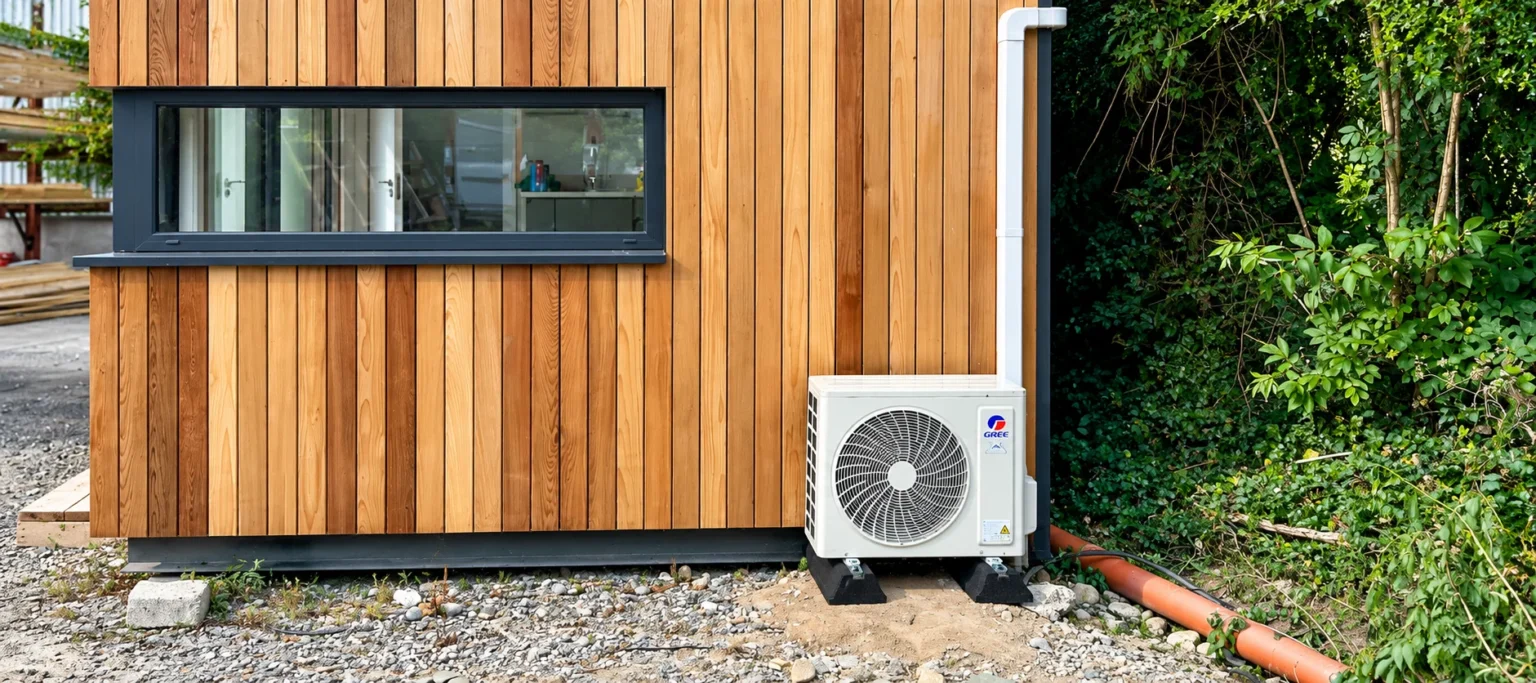
A heat pump moves heat from the outside air into the room instead of making it from scratch. For every unit of electricity it uses, it delivers two and a half to four units of heat. That multiplier is the SPF. A modern Daikin or Gree wall unit, sized properly for the room, sits around 3 to 3.5 across an Irish winter, which is why we use 3 as the honest middle figure rather than the best case.
What that means for one room
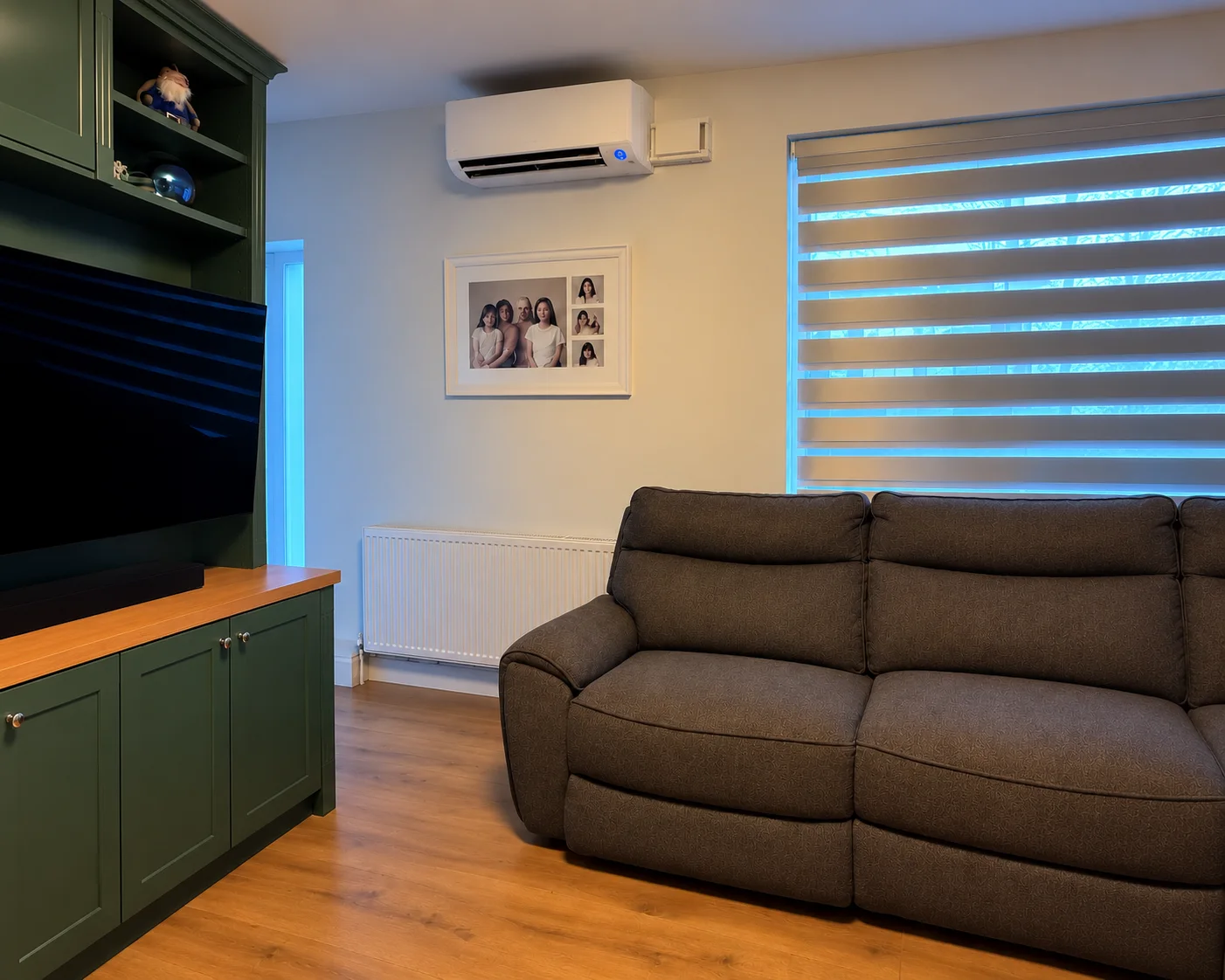
A typical living room in an Irish semi needs somewhere around 1,000 kWh of heat over a winter if you heat it for a few hours a day. Here is what that costs on each system.
| System | Cost per kWh of heat |
|---|---|
| Air-to-air heat pump (SPF 3) | 11.5c |
| Air-to-air heat pump, night rate | 5.1c |
| Oil boiler, 80% efficient | 14.6c |
| Mains gas, band D2, 80% | 16.3c |
| Electric heater | 34.4c |
Against an electric heater the heat pump saves about €230 a winter on one room. Against oil or gas the saving on a single room is smaller, €30 to €50, because boilers are already reasonable at making heat. The difference with oil and gas is that the heat pump lets you heat one room instead of the whole system, which is where most of the real saving comes from.
What that means for a whole house
Scale the same numbers up to a house that needs 10,000 kWh of heat a year and the gap is clearer.
| System | Annual cost for 10,000 kWh of heat |
|---|---|
| Air-to-air heat pumps (SPF 3) | €1,150 |
| Oil boiler, 80% | €1,460 |
| Mains gas, band D2, 80% | €1,630 |
| Mains gas, band D1, 80% | €2,050 |
| Electric storage heaters | €3,820 |
Two things to add to the oil and gas lines. Gas has a standing charge of several hundred euro a year on top of the units, and oil has boiler servicing and the cost of filling a tank in one go. Neither appears in the per-kWh figure.
“Changed from oil heating to air to air, couldn’t be more happier in terms of heating, also tried the cooling option for my home, works perfect.” Tom Doyle, Google review
Where the heat pump does not win
We would rather you knew this before you bought one.
- Hot water. A standard air-to-air unit heats air, so you keep your immersion or boiler for showers. If you want hot water from the heat pump too, a Daikin Multi+ runs the wall units and a hot water cylinder from one outdoor unit. Radiators and underfloor heating are a different job: that is an air-to-water system, at a much bigger price.
- A badly sized unit. Too small and it runs flat out at a poor SPF. Too big and it short-cycles. Sizing on a survey is the difference between 11.5c and 14c per kWh.
- Old, draughty rooms. The heat pump still costs less per kWh, but a room that leaks heat needs more kWh. Insulation first, then heating.
How to get the most out of it
- Use a night-rate tariff. Pre-heating the room on the 15.42c night rate brings the cost per kWh of heat down to around 5c. Set the timer to run from early morning.
- Heat the rooms you use. One unit in the living room and one in the main bedroom covers most evenings and mornings without running the boiler at all.
- Leave it on low rather than blasting it. Inverter units are most efficient holding a temperature, not catching up from cold.
- Keep the filter clean. A blocked filter knocks the SPF down. We clean it at the annual service, from €100 per unit.
What it costs to install
A single wall-mounted Daikin or Gree unit, supplied and fitted, starts from €1,850 including VAT. Multi-room systems running two to five indoor units from one outdoor unit are priced on a free survey. A whole-house system of around €14,000 qualifies for the SEAI air-to-air heat pump grant of €7,500, plus €2,000 boiler scrappage, for homes built before 2021 when the work is done by an SEAI-registered installer. MM Air is SEAI registered (Contractor ID 20260). A single-room unit does not get a grant. Details of what is included and how the install goes are on our installation page.
On a €1,850 install saving €230 a year against electric heating, the unit pays for itself in about eight years. Against oil or gas on a single room the payback is longer, so the case there is comfort, cooling in summer and not running the whole boiler for one room, rather than the saving alone.
Frequently asked questions
Is an air-to-air heat pump cheaper to run than oil?
Yes, on SEAI’s July 2026 figures: about 11.5c per kWh of heat against 14.6c to 16.7c for kerosene. The saving is bigger if you run the heat pump on a night rate.
Is it cheaper than gas?
Yes. Mains gas works out at 14.5c to 20.5c per kWh of heat depending on your tariff band and boiler efficiency, before the standing charge.
How much cheaper than an electric heater?
About a third of the cost. An electric heater gives 1 kWh of heat per kWh of electricity at 34.4c. A heat pump gives roughly 3 kWh for the same electricity.
Does it still work when it is freezing outside?
Yes. The units heat down to around minus 15, and an Irish cold snap makes little difference to how they run or what they cost.
Can it replace my oil boiler completely?
For heating the rooms, yes, with a unit in each main room or a multi-split. For hot water, yes too if you choose a Daikin Multi+ with a hot water cylinder; otherwise most customers keep the boiler or immersion for water and stop using it for heating.
Get a running cost estimate for your home
Tell us the rooms, how you heat them now and roughly what you spend, and we will give you a straight comparison and a fixed installation price within 24 hours.
Fuel prices are from SEAI’s Domestic Fuel Cost Comparison dated 1 July 2026 and change with each edition. Heat pump figures use an SPF of 3; your result depends on the unit, the room and how you run it. Grant conditions are set by SEAI; check seai.ie.